










| File Reference : | ISO 14001 Toolkit |
| Date File Updated | 06-10-26 |
| Category | Toolkits | Tags: ISO 14001, ISO 14001:2026, ISO 9001, environmental management, EMS, IMS, documentation toolkit |
This toolkit is included in the alphaZ subscription
Every alphaZ document and toolkit, with updates as they are released. Everything you download is yours to keep.
You are logged in as an alphaZ subscriber
This toolkit's 3 files are ready to download from the Download Files tab below.
We used this toolkit to set up our environmental management system from scratch and achieved ISO 14001 certification with no issues. The IMS1 framework just made sense - we filled in the gaps for our operations rather than building everything from a clause checklist.


Download the files with your company name and logo already added!
Document Preparation is included with the alphaZ subscription.

Included with the alphaZ subscription:
- Unlimited email support **
- 30 minute consultation meeting
- Document preparation

To keep up to date with any changes to the ISO standards or alphaZ documents updates we have a free email update service
How to Download
This toolkit is included in the alphaZ subscription.

ISO 14001 Toolkit
The ISO 14001 Toolkit is a set of editable templates in Word, Excel and PowerPoint for building an environmental management system (EMS) that meets ISO 14001:2026, the international standard for environmental management. It covers what ISO 14001 requires you to document, from the scope and environmental policy to environmental aspects and impacts, compliance obligations, emergency preparedness, internal audit and management review, with the everyday waste, spill and hazardous substance records underneath them.
It is written for organisations implementing ISO 14001 on its own, those running it with ISO 9001, and consultants setting up systems for clients. The significant environmental aspects of a business decide much of what the system has to control, so the aspects register sits at the centre of the toolkit: an office, a workshop and a site contractor end up with different aspects, controls and objectives from the same templates.
There are two ways to use it. The standalone EMS manual covers only the requirements of ISO 14001:2026, for businesses implementing it on its own. The integrated IMS1 manual covers ISO 9001 and ISO 14001 together, for businesses running both or planning to add ISO 9001 later. The ISO 14001:2026 correlation shows where each clause is met, and each clause has its own page in the ISO 14001 knowledge base.
What's in the ISO 14001 Toolkit
You receive the full document set in numbered folders, with the standalone EMS manual, its correlation and its audit checklist supplied separately to swap in if you take that route.
- Environmental procedure and policy: PP-6-100 Environmental Management, covering legal compliance, monitoring of environmental impacts, energy and emissions, resource use and biodiversity, noise and nuisance, awareness and training, incident prevention, emergency preparedness, spill response, hazardous substances and waste, and P-2 Environmental Policy
- Aspects and performance: F-IMS60 Environmental Aspects and Impacts Register, F-ENV3 Environmental Aspect Assessment, F-ENV6 Environmental Life Cycle and ER34 Environmental Performance Register, with F-IMS62 Carbon Management Plan in the Draft folder
- Waste, spills and hazardous substances: F-ENV2 Waste Matrix, F-HS4 COSHH Register and F-HS5 COSHH Assessment, with F-ENV1 Waste Transfer Note and F-ENV7 Spill Record in the Draft folder
- Compliance obligations: IMS1-1-6 Legal Compliance and the ER9 Legal Register, with F-IMS27 Legal Register in the Draft folder
- Manuals: the standalone EMS manual and the integrated IMS1 manual, plus a matching standalone procedure for each section of the integrated manual if you prefer separate procedures
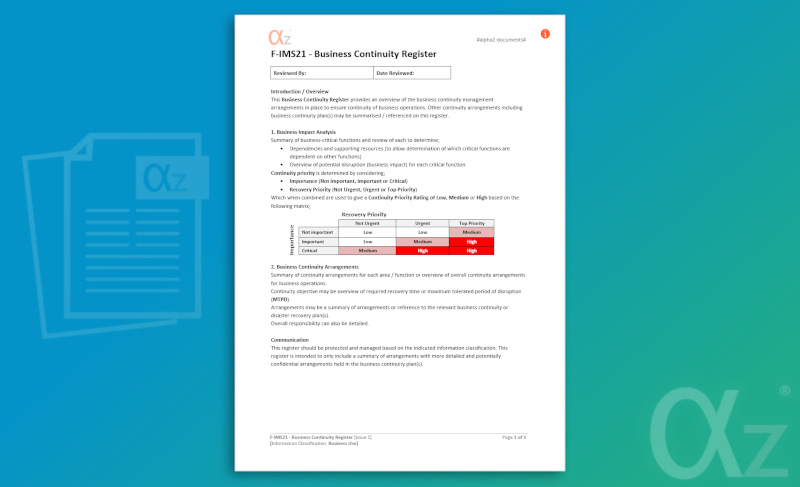
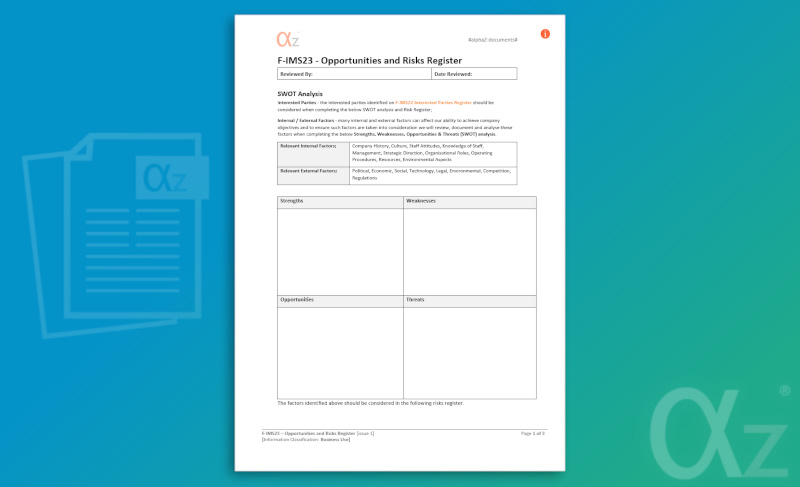
- IMS registers: F-IMS20 Document Register, F-IMS22 Interested Parties Register, F-IMS23 Opportunities and Risks Register and F-IMS43 Communications Register, with F-IMS38 Climate Change Review and F-IMS40 Opportunities and Objectives Register in the Draft folder
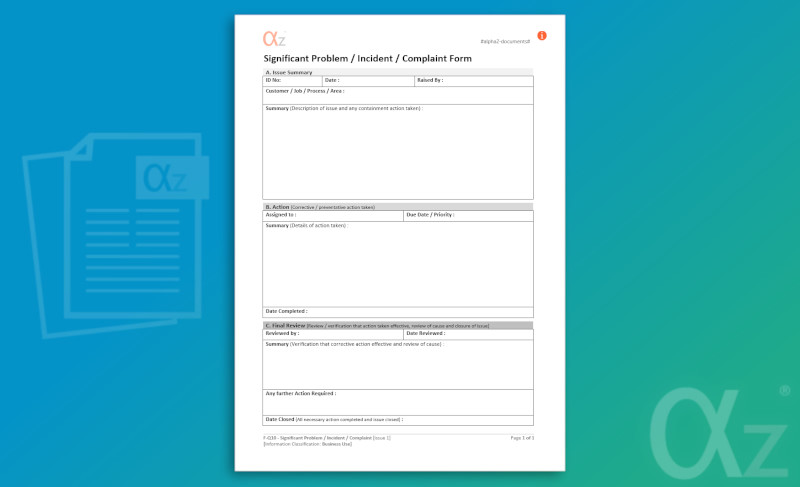
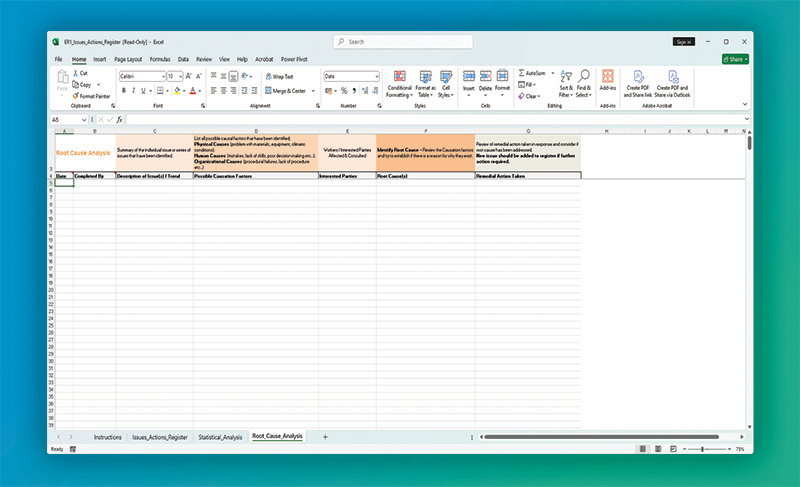
- Forms and Excel registers for management review, problems and corrective action, improvement requests, change review, staff induction and training, and supplier and contractor appraisal
- Audit checklists: ER11 Audit Schedule, F-Q2A Audit Checklist, the ISO 14001:2026 internal audit checklist, an ISO 14001 documentation checklist, the IMS1 Section 6 audit checklist, and environmental process audit checklists covering waste, the storage of oils and chemicals, incident prevention and the use of bins
- Training: the ISO 14001:2026 awareness training course and certificate template, environmental training talks and guidance on general environmental management, bins, storing oils and chemicals, emergency response and spills, an internal audit training course, and the optional ENV1-1 Environmental Staff Handbook
- Setup guidance: the ISO 14001 Toolkit Guidance, Getting Started guide, IMS1 Manual Guidance, gap analysis checklists, implementation and maintenance checklists, including those for the environmental section, ISO 14001:2026 guidance and the ISO 14001:2026 correlation
The integrated set also carries the ISO 9001 files. If you take the standalone route, the Toolkit Guidance lists those that can be moved to a Draft folder. Other optional files, including the 2015 versions of the key ISO 14001 files for organisations still certified to that edition, sit in Draft folders, ready to move across if needed. Every file is named in the toolkit files index.
How to use the toolkit
- Choose your route. Read the ISO 14001 Toolkit Guidance and decide between the standalone EMS manual and the integrated manual. For the standalone route, swap in the EMS manual, correlation and audit checklist as the guidance describes.
- Gap analysis. With the Getting Started guide to hand, work through the checklists for the core sections and the environmental section to see what is already in place. Gap analysis is covered in the knowledge base.
- Branding. Put your own name and logo on the files, or let document preparation, part of the alphaZ subscription, do it for you.
- Scope and context. Complete the scope, then work through the issues affecting the business on F-IMS23, including environmental conditions, and the needs of interested parties on F-IMS22. Setting up a management system covers the wider steps.
- Aspects and compliance obligations. List your activities on F-IMS60 with their aspects and impacts, using a life cycle perspective, decide which are significant and record the controls, including the response to an emergency. Then list the legal and other requirements that apply on the legal register, and set environmental objectives.
- Implementing. Edit PP-6-100 to describe your own arrangements, brief workers with the awareness course and training talks, and start recording environmental performance on ER34, waste on F-ENV2, and spills and other incidents as they occur.
- Internal audit and management review. Plan the audits on ER11, audit the system using the ISO 14001:2026 internal audit checklist, including whether compliance obligations are being met, record the actions on ER1, and hold a management review on F-Q3.
- Certification. Pick a certification body and arrange the audit, using the ISO certification process page as a guide to the stages. Once certified, the maintenance checklist helps keep the EMS current.
What ISO 14001 asks you to document
Documents and records required by ISO 14001 are known as documented information. In the 2026 edition each is described as available, such as the scope, the environmental policy, the significant aspects and the compliance obligations, or available as evidence, such as competence records, monitoring results, compliance evaluations and audit results. The table goes through the standard clause by clause, with what is needed, the files that meet it and a link to the knowledge base page. IMS1 references use the numbering of the integrated manual; in the standalone EMS manual the environmental content is in Section 4 and 5.1, and its own correlation gives the numbers.
| Clause | What is needed | Toolkit files |
|---|---|---|
| 4.1, 4.2 and 4.3 Context and scope | A documented scope, taking account of the authority and ability to control and influence over the life cycle of activities, products and services. It is set after considering environmental conditions such as pollution levels, natural resources, climate change, biodiversity and ecosystem health, and which needs and expectations of interested parties become compliance obligations | IMS1-1-2 Scope; IMS1-1-3 Context; F-IMS23 Opportunities and Risks Register; F-IMS22 Interested Parties Register; F-IMS38 Climate Change Review |
| 4.4 Environmental management system | The system and the processes it needs, and how they interact. The clause sets no specific record | IMS1 Section 6 Environmental Management; PP-6-100 Environmental Management |
| 5.1 Leadership | Top management accountability and commitment. The clause sets no specific record | IMS1-2-2 Responsibilities |
| 5.2 Environmental policy | The environmental policy, including a commitment to protect the environment, available as documented information, communicated in the organisation and available to interested parties | P-2 Environmental Policy; IMS1-2-1 Company Policies and Objectives |
| 5.3 Roles and responsibilities | Environmental responsibilities and authorities assigned and communicated. The clause sets no specific record | IMS1-2-2 Responsibilities; IMS1-2-3 Organisational Chart |
| 6.1.1 Planning processes | The processes for environmental aspects, compliance obligations, risks and opportunities, and planning action | IMS1-6-1 Commitment to Environmental Protection; IMS1-6-2 Environmental Assessment; IMS1-2-5 Risks and Opportunities |
| 6.1.2 Environmental aspects | The aspects and associated impacts, the criteria used to determine significance, and the significant aspects, considering normal and abnormal conditions, change, potential emergency situations and a life cycle perspective | F-IMS60 Environmental Aspects and Impacts Register; F-ENV3 Environmental Aspect Assessment; F-ENV6 Environmental Life Cycle; IMS1-6-2 Environmental Assessment |
| 6.1.3 Compliance obligations | The legal requirements and other requirements that apply, and how they apply to the organisation | IMS1-1-6 Legal Compliance; ER9 Legal Register; F-IMS27 Legal Register |
| 6.1.4 Risks and opportunities | The risks and opportunities that need to be addressed, including the potential for external environmental conditions to affect the organisation | F-IMS23 Opportunities and Risks Register; IMS1-2-5 Risks and Opportunities |
| 6.1.5 Planning action | Action planned on significant aspects, compliance obligations, and risks and opportunities. The clause sets no specific record | F-IMS60 Environmental Aspects and Impacts Register (controls); IMS1-1-6 Legal Compliance; F-IMS23 Opportunities and Risks Register |
| 6.2 Environmental objectives | The environmental objectives, with what will be done, the resources required, who is responsible, when it will be completed and how results will be evaluated, including the indicators for monitoring progress | IMS1-2-1 Company Policies and Objectives; F-Q3 Management Review; F-IMS40 Opportunities and Objectives Register; F-Q11 Company Objectives; F-IMS62 Carbon Management Plan |
| 6.3 Planning of changes | Changes that affect or can affect the system carried out in a planned way, so its intended outcomes can still be achieved. The clause sets no specific record | IMS1-4-4 Management of Change; F-Q23A Change Review; F-Q23B Management System Change Review |
| 7.1 Resources | The resources the system needs. The clause sets no specific record | IMS1-3-1 Management of Staff and Company Personnel; IMS1-3-2 Management of Equipment and Premises |
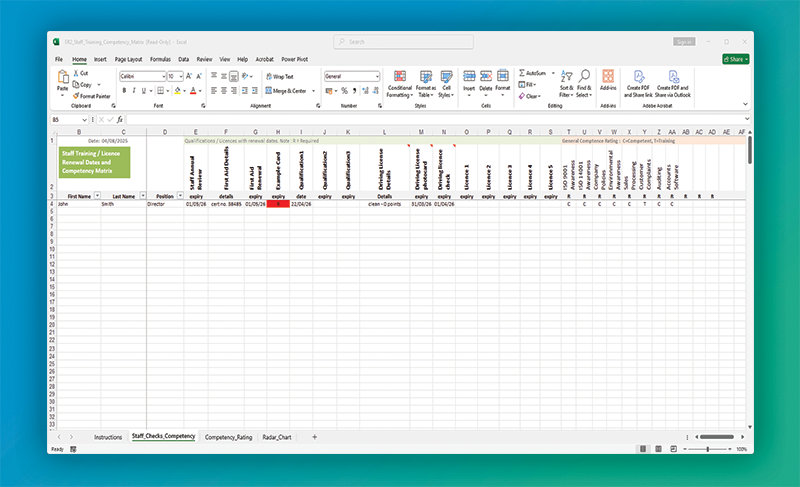
| 7.2 Competence | Evidence that people whose work affects environmental performance and compliance obligations are competent, with training needs determined | ER2 Staff Training and Competency Matrix; F-Q4 Staff Induction Record; F-Q5 Staff Training Record; IMS1-6-1 Commitment to Environmental Protection |
| 7.3 Awareness | People aware of the environmental policy, the significant aspects and impacts of their work, their contribution, and what follows if they do not conform. The clause sets no specific record | ISO 14001:2026 awareness training course; environmental training talks; PP-6-100 Environmental Management; ENV1-1 Environmental Staff Handbook |
| 7.4 Communication | Internal and external communication processes consistent with the compliance obligations, and evidence of communications | IMS1-3-3 Management System Communication; F-IMS43 Communications Register |
| 7.5 Documented information | How documents and records are identified, reviewed and approved, controlled, stored and retained, including documents of external origin | IMS1-1-5 Management of Documented Information and Data; F-IMS20 Document Register |
| 8.1 Operational control | The operational processes and operating criteria, documented to the extent needed for confidence they run as planned, with control or influence over externally provided processes, products and services and a life cycle perspective on design, purchasing and information for users | IMS1-6-4 Environmental Procedures and Arrangements; PP-6-100 Environmental Management; F-ENV2 Waste Matrix; F-ENV1 Waste Transfer Note; F-HS4 COSHH Register; F-HS5 COSHH Assessment; F-ENV6 Environmental Life Cycle; F-Q9 Supplier and Contractor Appraisal; ER3 Key Supplier and Contractor Register; F-Q1 Design Review and Planning |
| 8.2 Emergency preparedness | The processes for preparing for and responding to potential emergency situations, documented to the extent needed for confidence they run as planned | IMS1-6-3 Environmental Incident Prevention and Management; PP-6-100 Environmental Management; F-IMS60 Environmental Aspects and Impacts Register; F-ENV7 Spill Record; GG-6-04 Environmental Emergency Response; GG-6-05 Spill Procedure |
| 9.1.1 Monitoring and measurement | Evidence of the results of monitoring, measurement, analysis and evaluation of environmental performance | ER34 Environmental Performance Register; IMS1-6-2 Environmental Assessment; IMS1-5-4 Continual Improvement; F-Q3 Management Review |
| 9.1.2 Evaluation of compliance | Evidence of the results of evaluating whether compliance obligations are being met | IMS1-6-1 Commitment to Environmental Protection; IMS1 Section 6 audit checklist; F-Q3 Management Review |
| 9.2 Internal audit | The audit programme, evidence that it has been carried out, and the audit results | IMS1-5-3 Management System Audits; ER11 Audit Schedule; F-Q2A Audit Checklist; ISO 14001:2026 internal audit checklist |
| 9.3 Management review | Evidence of the results of each management review | IMS1-2-4 Management Review; F-Q3 Management Review |
| 10.1 Continual improvement | Continual improvement of the system to enhance environmental performance. The clause sets no specific record | IMS1-5-4 Continual Improvement; F-Q16 Improvement Request; ER1 Issues and Actions Register |
| 10.2 Nonconformity and corrective action | The nature of each nonconformity, the action taken, and the results of any corrective action | IMS1-5-2 Control of Nonconforming Outputs, Problems and Complaints; F-Q10 Significant Problem / Incident / Complaint; ER1 Issues and Actions Register |
The ISO 14001:2026 correlation goes further, naming where each individual requirement is met and what to complete. To confirm nothing mandatory is missing, use the ISO 14001 documentation checklist.
Included in the alphaZ subscription
- Document preparation - files supplied with your company name and logo added
- Unlimited email support on using and implementing the toolkit **
- A 30 minute consultation meeting
- Full guidance, with a how-to guidance document and explainer videos
- Updates as they are released during your subscription, including when ISO 14001 is revised, and the email update service
- ISO compliance guarantee or your money back
For more hands-on help, remote support is available by the day or by project.
ISO 14001 Toolkit FAQs
ISO 14001:2026, published in April 2026, which replaces ISO 14001:2015 and takes in the 2024 climate change amendment. Updates are released during your subscription if the standard is revised.
Yes. The 2015 versions of the guidance, correlation, clause audit checklist, awareness course and certificate template are supplied in Draft folders, so you can keep working to that edition. For moving to 2026, the ISO 14001:2026 Transition Guidance lists the files to update or replace and the new files to add. The clause structure is the same and most of the changes clarify existing requirements. The main additions are clause 6.3 Planning of changes, the reorganised clause 6.1, and the audit programme listed as documented information.
Use the standalone route if you are implementing ISO 14001 on its own and do not expect to add ISO 9001. It keeps the manual to what ISO 14001 requires. Use the integrated route if you are implementing both standards, or want the option of adding ISO 9001 later. The ISO 14001 Toolkit Guidance sets out both routes and which ISO 9001-only files can be set aside, and the update post on the standalone EMS option explains the difference.
Yes. ISO 14001 shares its core structure with ISO 9001, so document control, internal audit, management review and corrective action are shared rather than duplicated. In the integrated manual, environmental management is a section of its own, Section 6, alongside Sections 1 to 5. The ISO 9001/14001 Toolkit page has the same integrated set.
F-IMS60 Environmental Aspects and Impacts Register lists each activity with its aspects and impacts, assesses significance against the criteria on the register, and records the controls, including the planned response to an emergency. F-ENV3 Environmental Aspect Assessment and F-ENV6 Environmental Life Cycle support the assessment and the life cycle perspective. The knowledge base page on environmental aspects and impacts explains the approach.
The legal and other requirements that apply are listed in IMS1-1-6 Legal Compliance, with the full detail on the ER9 Legal Register, so policies and procedures refer to one place rather than naming legislation themselves. Compliance is evaluated at least annually through internal audits, and the results are considered as part of management review.
Yes. ER34 Environmental Performance Register records performance data such as energy and water use, waste, transport and materials, with a carbon emissions report against a baseline. F-IMS62 Carbon Management Plan and F-IMS38 Climate Change Review are in the Draft folders for organisations that want a more detailed plan or review, along with a net zero policy. See also carbon management and net zero.
Everything you complete or tailor is in Word or Excel. Training courses are in PowerPoint, and the toolkit guidance, standards guidance and correlations are PDFs.
A certification body decides that after auditing the environmental management system, which has to be running with records to show it. The toolkit gives you the documented information ISO 14001 requires, the forms and registers for those records, and email support on using them. A copy of the standard itself is bought separately from ISO or a national standards body.
Further Reading
Further guidance on environmental management and ISO 14001:
** unlimited email support is only provided for requests related to the use and implementation of the supplied toolkit, if you need general ISO and other support please arrange for remote support
These files are for alphaZ subscribers. Log in to the subscriber library once and each file below downloads straight away. Not a subscriber yet? See the alphaZ subscription.
Each file downloads straight away. You can also browse the subscriber library.
- EMS Zip, 513 KB
- ISO14001-2026 Transition Guidance PDF, 117 KB
- ISO-14001 Toolkit Guidance PDF, 62 KB
The full integrated set is in the ISO 9001 / 14001 Toolkit folder of the subscriber library.


