


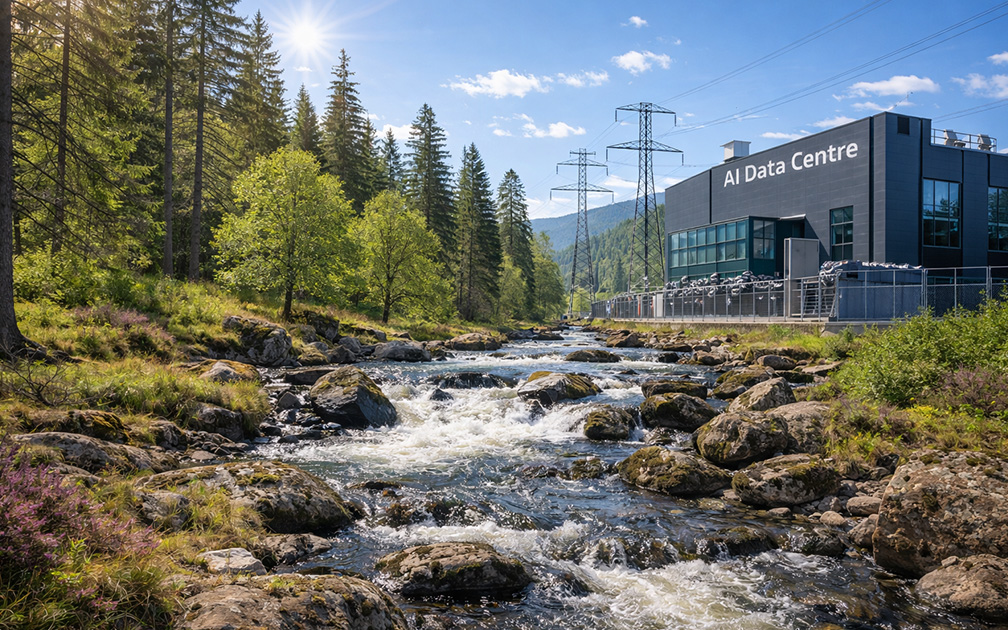
It’s recently been reported that the number of data centres in the UK is expected to increase by around a fifth, with 100 new centres due to be built. The reason for this surge in the number of data centres is partly due to the growth of Artificial Intelligence (AI) which is leading to ever increasing demands for cloud-based processing power.
Data centres can be very large, some occupy millions of square feet in floor space, and they use a lot of power which is already having a measurable impact on overall UK energy consumption. Some data centres also use water cooling systems and consume significant volumes of water. Data centres are therefore having a direct impact on their local environment in terms of power use, water use and even air pollution.
The ISO 14001 Environmental Management Standard requires an environmental impact assessment to be completed to consider all aspects of operations that could have an impact on the environment. This assessment should now include consideration of the environmental impact of cloud computing and the use of AI with the significance of the impact determined by level of AI use and the environmental performance of the selected cloud / AI provider(s).
If you’re ISO 14001 compliant / certified you need to review your environmental impact assessment to ensure cloud computing / use of AI is included and has been assessed. The main tool available for reducing environmental impact associated with this aspect is likely to be through the selection of a cloud provider who reports on their environmental performance and is committed to reducing their environmental impact.
An example Environmental Aspects and Impacts Register with consideration of cloud computing / AI use is available in the alphaZ Subscriber Sample Data Files page. To access this please login or purchase an alphaZ subscription
Published: 24th February 2026
